
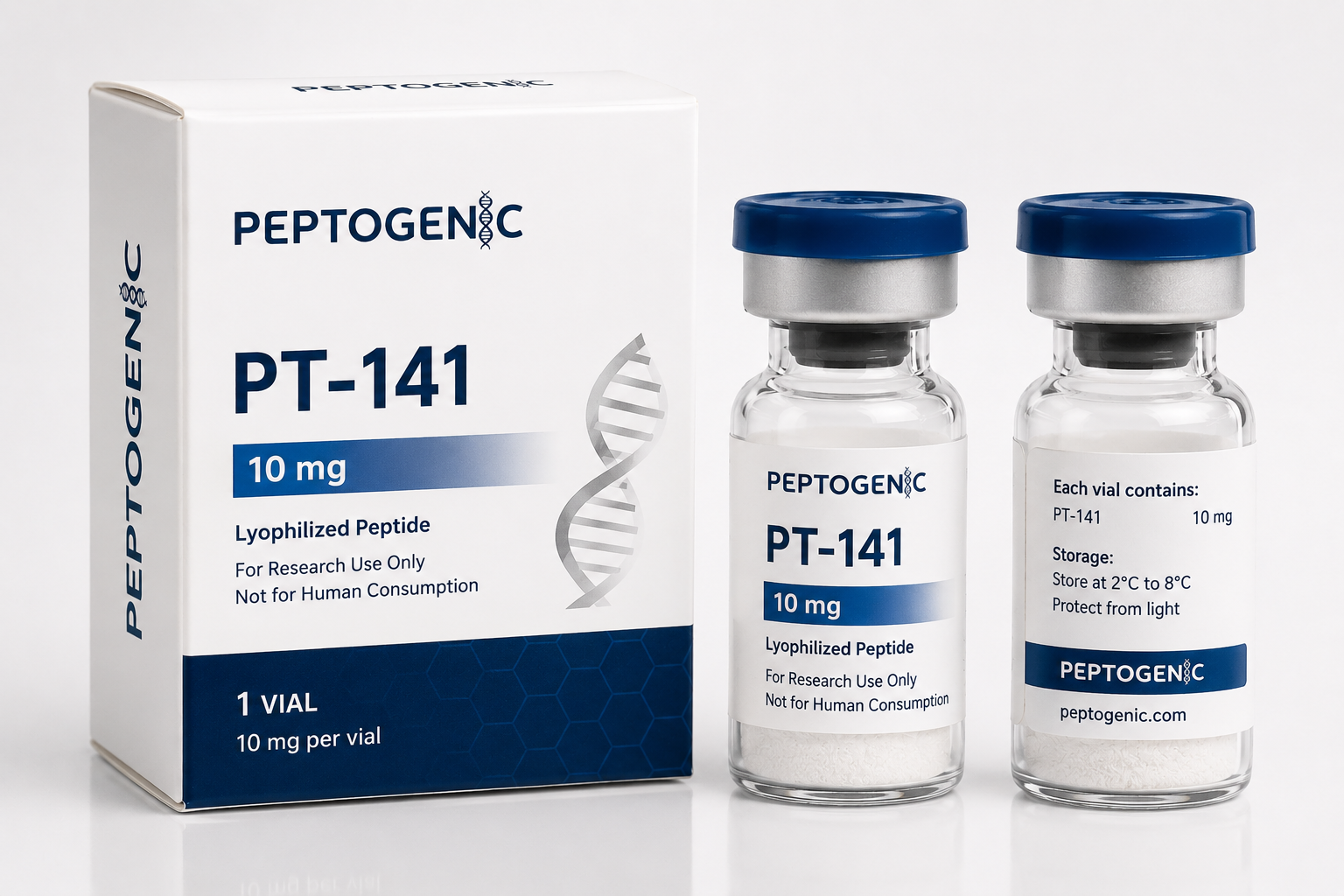
PT-141 Mechanism of Action Explained
What is PT-141?
The PT-141 mechanism of action describes how this synthetic peptide, also known as Bremelanotide, interacts with the melanocortin receptor system in the central nervous system.
Unlike compounds that act primarily on vascular pathways, PT-141 is studied for its effects on neurological signaling and melanocortin receptor activation.
⚡ PT-141 Mechanism of Action
It works through central nervous system receptor signaling.
Core biological actions:
- Activation of melanocortin receptors (MC receptors)
- Modulation of central nervous system signaling pathways
- Influence on dopaminergic and neuropeptide activity
- Interaction with hypothalamic signaling systems
🧠
PT-141→melanocortin receptor activation→neuropeptide signaling→central nervous system response
Key Research Applications
It is studied in experimental and clinical contexts involving:
- Melanocortin receptor signaling
- Neuroendocrine communication pathways
- Central nervous system peptide research
- Dopamine-related signaling studies
- Hormonal and neurological pathway interactions
Scientific Context
Research involving PT- 141 and melanocortin receptor agonists is documented in:
These databases contain studies related to neuropeptide signaling, melanocortin receptors, and CNS regulation.
Regulatory Status (Europe & Global)
Compounds affecting neuroendocrine signaling are regulated by agencies including:
- European Medicines Agency
- Medicines and Healthcare products Regulatory Agency
Approval status and indications vary by region.
Safety & Compliance Note
It is a biologically active peptide affecting neurological pathways. Usage and handling should follow appropriate medical and regulatory guidance.
Chloe W –
I was a bit skeptical at first, but after my first order I’m convinced. Everything checked out perfectly.