
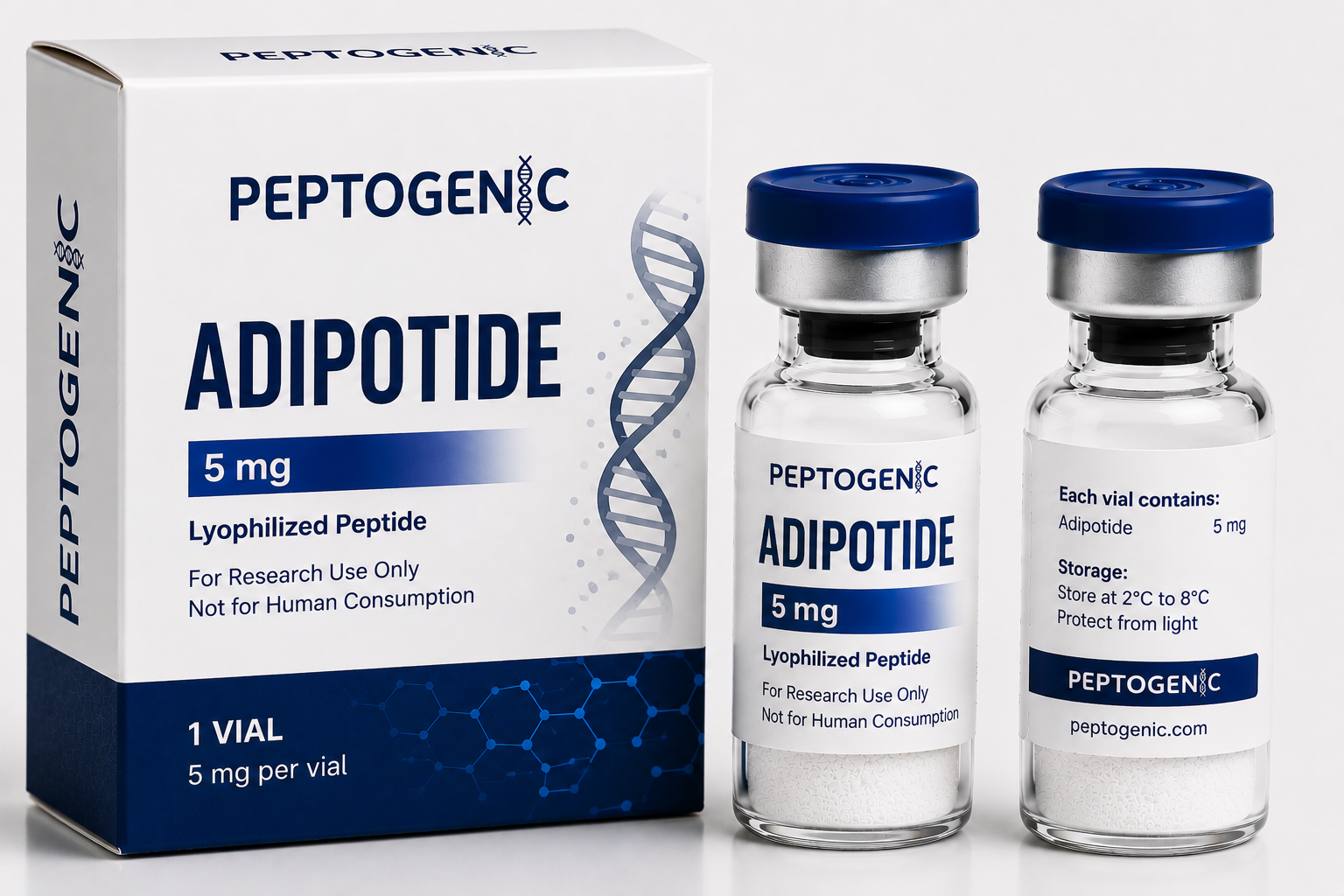
Adipotide Mechanism of Action Explained
What is Adipotide?
The Adipotide mechanism of action describes how this experimental peptide was studied for its ability to target fat cells (adipocytes) by interacting with blood vessel markers associated with adipose tissue.
Adipotide has been researched in experimental models related to fat metabolism, vascular targeting, and adipocyte apoptosis pathways.
⚡ Adipotide Mechanism of Action
Adipotide is believed to work through targeted vascular disruption in fat tissue.
Core biological actions:
- Binding to blood vessel receptors in adipose tissue
- Disruption of fat tissue blood supply (vascular targeting)
- Induction of adipocyte apoptosis (cell death)
- Reduction of localized fat storage in experimental models
Key Research Applications
Adipotide is studied in experimental contexts involving:
- Fat metabolism and adipose tissue research
- Vascular targeting mechanisms
- Apoptosis (cell death) signaling pathways
- Obesity-related experimental models
- Energy balance and fat storage studies
Scientific Context
Research on Adipotide peptide is documented in PubMed and experimental animal studies referenced in ClinicalTrials.gov, focusing on adipose tissue targeting and metabolic pathways.
Regulatory Considerations (Europe)
Experimental metabolic compounds are regulated by:
- European Medicines Agency
- Medicines and Healthcare products Regulatory Agency
Classification varies by jurisdiction and intended use.
Safety & Compliance Note
Adipotide Peptide is a research-stage compound studied in laboratory settings and is not approved for clinical use. It should only be handled within appropriate scientific frameworks.

Johnson Mann –
Clear improvement in muscle recovery time.
I feel stronger and more resilient after workouts.
A premium-quality peptide product.