
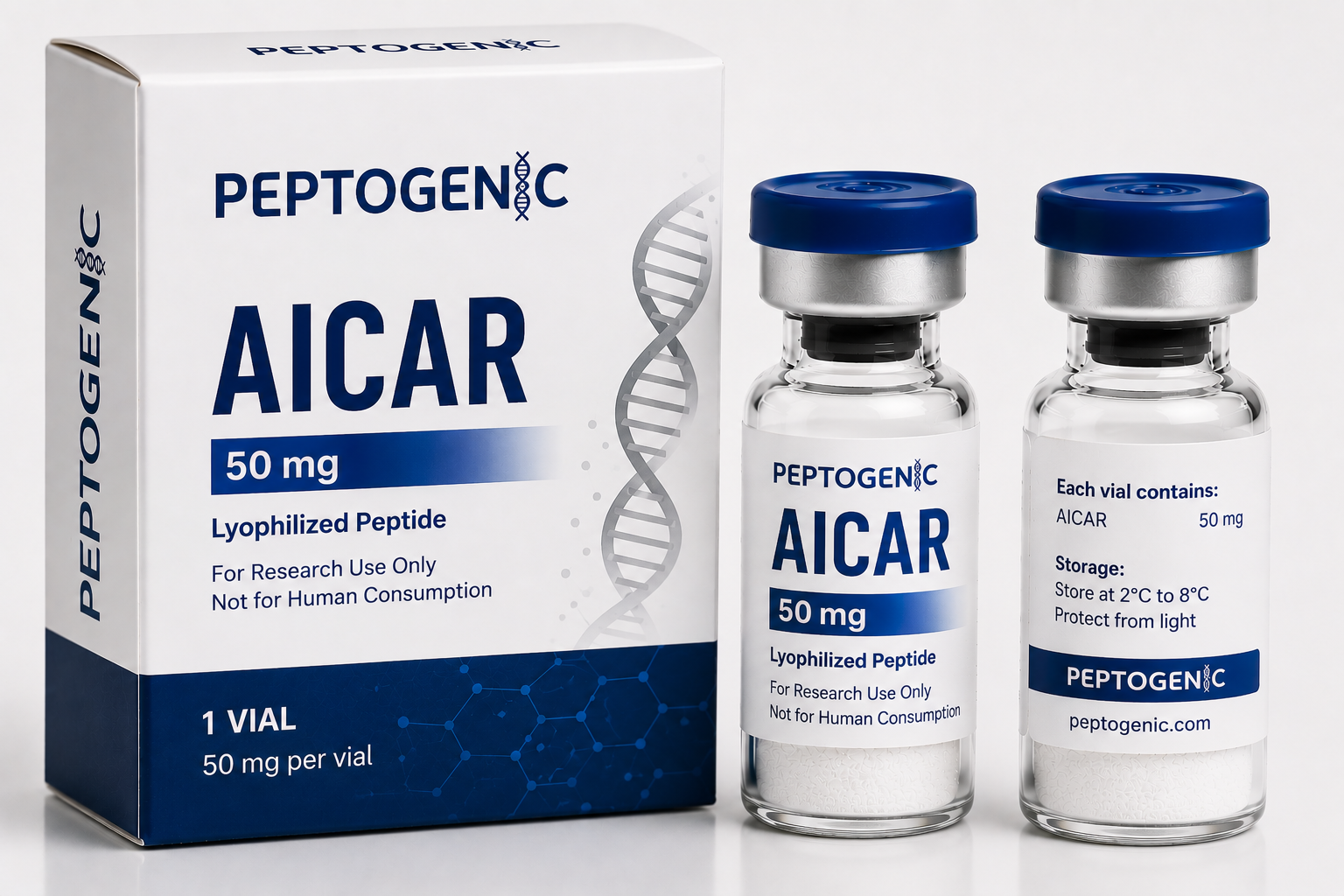
AICAR AMPK Mechanism of Action Explained
What is AICAR?
The AICAR AMPK mechanism of action describes how AICAR (5-Aminoimidazole-4-carboxamide ribonucleotide) influences cellular energy metabolism by activating the AMP-activated protein kinase (AMPK) pathway.
AICAR is widely studied in metabolic research for its role in energy balance, mitochondrial function, and cellular stress response signaling.
⚡ AICAR Peptide Mechanism of Action
AICAR works by mimicking cellular energy stress signals.
Core biological actions:
- Activation of AMPK (energy sensor enzyme)
- Increased glucose uptake in cells
- Enhanced fatty acid oxidation pathways
- Improved mitochondrial energy efficiency
🧠
Key Research Applications
AICAR peptide is studied in experimental models involving:
- Metabolic regulation and energy balance
- Mitochondrial function research
- Endurance and cellular performance studies
- Glucose metabolism pathways
- Exercise physiology and adaptation models
Scientific Context
Research on AICAR and AMPK signaling is documented in PubMed and experimental studies listed in ClinicalTrials.gov, focusing on cellular metabolism and energy regulation pathways.
Regulatory Considerations (Europe)
Metabolic and bioactive research compounds are regulated by:
- European Medicines Agency
- Medicines and Healthcare products Regulatory Agency
Classification depends on country and intended research use.
Safety & Compliance Note
AICAR peptide is a biologically active research compound studied in controlled laboratory environments and should only be handled within appropriate regulatory frameworks.

Julien Morel –
High purity and excellent formulation.
Recovery time has significantly decreased.
Very satisfied with the quality.