
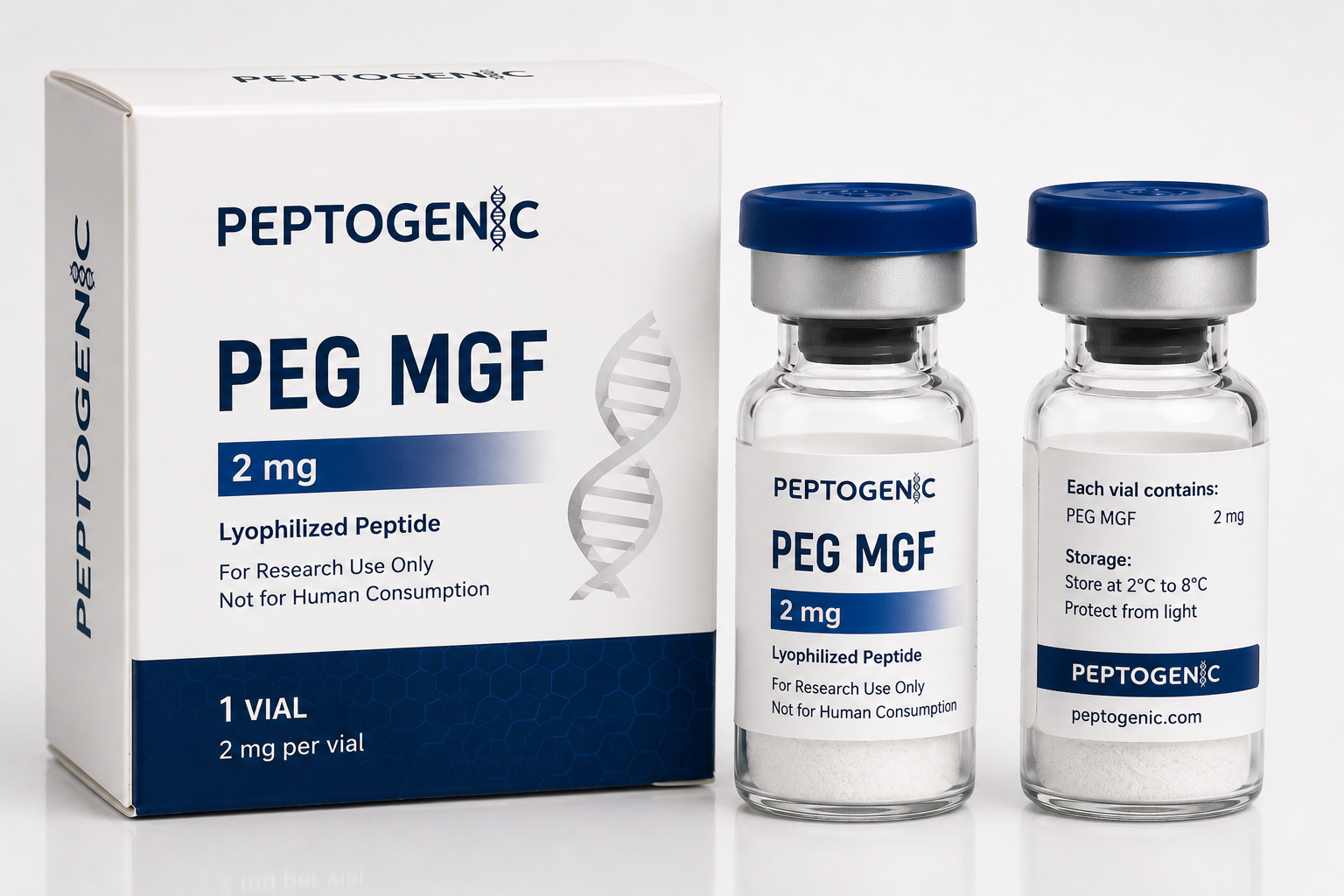
PEG-MGF Peptide Mechanism of Action Explained
What is PEG-MGF?
The PEG-MGF peptide mechanism of action refers to how Pegylated Mechano Growth Factor functions as a modified splice variant of IGF-1 involved in muscle repair and tissue regeneration research.
PEG-MGF is derived from the Mechano Growth Factor (MGF), which is expressed in response to mechanical stress in muscle tissue. Pegylation increases its stability and duration of activity in research models.
🧬 PEG-MGF Mechanism of Action
PEG-MGF is believed to act through localized cellular signaling pathways that regulate muscle repair and adaptation.
Core biological actions:
- Activation of muscle satellite cell repair pathways
- Stimulation of localized IGF-1 signaling response
- Enhancement of tissue regeneration after mechanical stress
- Prolonged activity due to pegylation (increased half-life)
Key Research Applications
PEG-MGF is studied in experimental models related to:
- Muscle tissue repair after exercise-induced stress
- Cellular regeneration and hypertrophy pathways
- Growth factor signaling mechanisms
- Recovery and adaptation biology
- IGF-1 splice variant research
Scientific Background
Research on growth factor peptides like PEG-MGF is documented in biomedical literature indexed by PubMed and experimental study databases such as ClinicalTrials.gov.
These sources explore IGF-1 variants, muscle repair pathways, and cellular regeneration mechanisms.
Regulatory Considerations (Europe)
Compounds that influence growth factor signaling are regulated by authorities such as the European Medicines Agency and Medicines and Healthcare products Regulatory Agency.
Regulatory classification may vary depending on research or medical context.
Luca Moretti –
I have been using peptides for a few months now, and the results are impressive. My recovery time has significantly improved, and I feel more energized throughout the day. Highly recommended.