
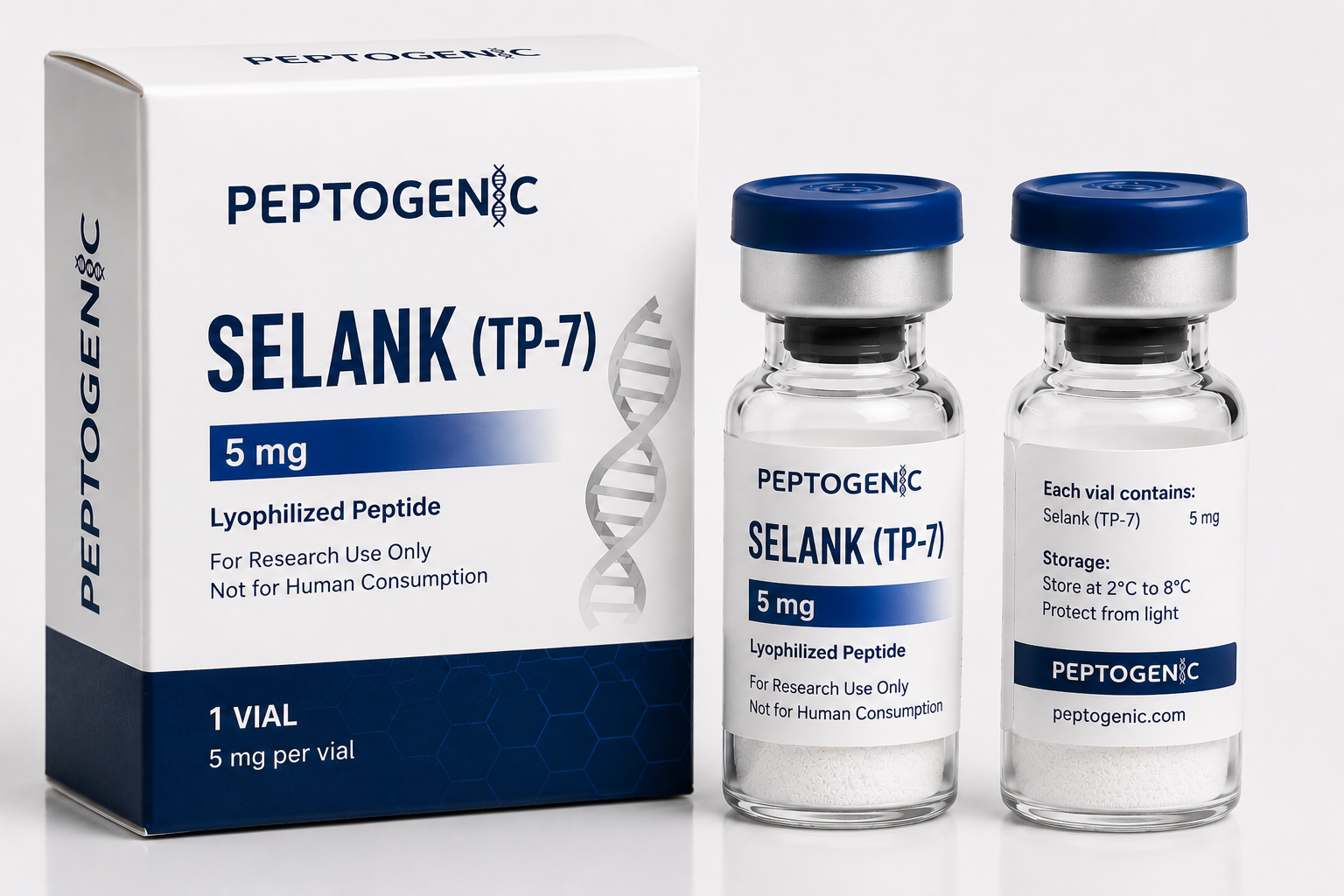
Selank Peptide Mechanism of Action Explained
What is Selank (TP-7)?
The Selank peptide mechanism of action focuses on a synthetic peptide derived from tuftsin, commonly referred to as TP-7. It is studied in neuroscience research for its interaction with neurotransmitter systems, cognitive processes, and stress-response pathways.
Selank has been explored in experimental models related to anxiety regulation, immune modulation, and brain signaling.
🧠 Selank Mechanism of Action
Selank is believed to influence several biological pathways involved in brain function and stress response.
Core actions:
- Modulation of GABAergic signaling pathways
- Interaction with serotonin and dopamine systems
- Influence on neuropeptide balance in the brain
- Potential effects on immune system signaling
🧬
Selank is studied in research models involving:
- Anxiety and stress-response pathways
- Cognitive function and memory research
- Neurotransmitter regulation studies
- Neuroimmune interaction research
- Behavioral and adaptation models
Scientific Context
Studies related to neuropeptides like Selank are indexed in PubMed and experimental registries such as ClinicalTrials.gov, covering neurotransmitter modulation and peptide-based signaling mechanisms.
Regulatory Considerations (Europe)
Substances affecting neurological systems are regulated by bodies such as the European Medicines Agency and Medicines and Healthcare products Regulatory Agency.
Safety & Compliance Note
Selank is a biologically active compound studied in controlled environments. Use and handling should remain within appropriate research or regulatory frameworks.



Geng honne –
Outstanding purity and effectiveness.
My overall vitality has increased significantly.
I confidently recommend it.