

Peptide Overview
Peptides are an important area of scientific research, appearing in studies involving molecular biology, biochemistry, cellular signalling and pharmaceutical development. Yet if you are new to the subject, understanding what peptides are, how they work in biological systems and how they differ from proteins can seem complicated.
Peptides are short chains of amino acids connected by peptide bonds. Amino acids are the building blocks used to form peptides and proteins, and the order in which they are linked influences the molecule’s structure and biological properties.
Interest in peptides has grown across scientific research, biotechnology and pharmaceutical development. However, not every peptide has the same purpose, and research findings about one compound cannot automatically be applied to another.
In this beginner’s guide, we explain what peptides are, the difference between peptides and proteins, the main categories of peptides studied in research, how peptide quality is evaluated and what to understand before interpreting claims about peptide products.
What Are Peptides?

Peptides are molecules made from two or more amino acids linked together through chemical bonds known as peptide bonds. Amino acids contain chemical groups that allow them to connect and form chains of different lengths and sequences.
The sequence of amino acids helps determine a peptide’s chemical properties, structure and potential biological activity.
Peptides occur naturally in living organisms. They participate in many biological processes, including cellular communication, hormone signalling and the regulation of physiological functions. Other peptides can be synthesised in laboratories for research and pharmaceutical development.
A peptide’s properties depend on several factors, including:
- Amino acid sequence: The order of the amino acids within the chain.
- Chain length: The number of amino acid residues present.
- Molecular structure: The way the molecule folds or adopts a particular shape.
- Chemical modifications: Changes that can influence stability, solubility or interactions with other molecules.
- Research context: The experimental conditions under which a peptide is studied.
These characteristics explain why two peptides can belong to the same broad category while having very different properties.
How Are Peptides Formed?
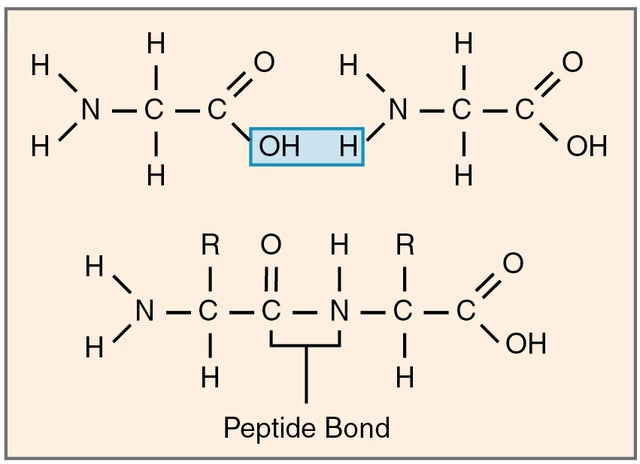
Peptides are formed when amino acids connect through peptide bonds. A sequence of linked amino acids creates a peptide chain, and longer chains can develop more complex structures.
In biological systems, cells use organised processes to produce proteins and many peptides. In laboratory research, synthetic peptide methods can also be used to assemble amino acids in a specified sequence.
The precise sequence matters because changing even one amino acid can alter a molecule’s structure or biological behaviour.
For this reason, identifying a peptide correctly is an important part of scientific research.
What Are Peptides Used For?
The phrase “what are peptides used for” can refer to several different areas. Some peptides occur naturally in the body, others are studied as experimental molecules, and certain peptide-based medicines have been developed and authorised for specific medical purposes.
It is important to distinguish established medical applications from experimental research and unverified commercial claims.
- Biochemistry and Molecular Biology
Peptides are used in laboratory studies investigating how molecules interact, how cells communicate and how biological processes are regulated.
Researchers may study peptide sequences to better understand molecular recognition, protein interactions and other biochemical mechanisms.
- Pharmaceutical Research
Some peptides have been investigated as potential drug candidates because of their ability to interact with particular biological targets.
Peptide-based medicines are used for certain authorised indications. However, a peptide being investigated in a laboratory does not mean it has been demonstrated to be safe and effective as a medicine.
The development of a medicine requires appropriate evidence, clinical evaluation and regulatory review.
- Cellular Signalling and Hormone Research
Some naturally occurring peptides act as signalling molecules. They may bind to specific receptors and influence processes such as hormone release, metabolism or communication between cells.
Researchers investigate these pathways to understand normal physiology and potential therapeutic applications.
- Analytical and Laboratory Research
Peptides can also serve as reference materials, analytical targets or experimental compounds in research involving molecular identification, chromatography and mass spectrometry.
These applications help researchers characterise molecules and investigate their chemical properties.
Peptides vs Proteins: What’s the Difference?
Peptides and proteins are closely related. Both are made from amino acids linked through peptide bonds, but they are often distinguished by their chain length, structural complexity and biological role.
A common introductory explanation describes peptides as shorter amino acid chains and proteins as longer chains that often form complex three-dimensional structures. However, there is no single chain-length cutoff used universally in every scientific context.
Feature| Peptides| Proteins
Basic building blocks| Amino acids| Amino acids
Chemical linkage| Peptide bonds| Peptide bonds
Chain length| Generally shorter| Generally longer
Structure| May be relatively simple or highly structured| Often fold into complex three-dimensional structures
Biological roles| Can act in signalling and other biological processes| Can provide structural, enzymatic, transport and signalling functions
Research applications| Biochemistry, molecular interactions and peptide development| Enzymology, structural biology and many other research areas
Are Peptides Smaller Than Proteins?
Generally, yes. Peptides are commonly described as shorter amino acid chains, while proteins are usually longer and have more extensive structural organisation.
Nevertheless, the distinction is not absolute. A long peptide chain can adopt complex structures, and some scientific definitions use different length thresholds.
The important point is that chain length alone does not tell you everything about a molecule’s function, quality or safety.
Are All Peptides Naturally Occurring?
No. Peptides can be found in nature, produced through biological processes or synthesised using laboratory methods.
Synthetic peptides can be designed to reproduce a naturally occurring sequence or to contain modifications that change particular chemical properties.
A synthetic molecule is not automatically unsafe, just as a naturally occurring molecule is not automatically safe. Evaluation depends on the specific compound, its intended application, the quality of the material and the available evidence.
What Are the Main Types of Peptides?
There are several ways to classify peptides. Scientists may group them by their biological function, amino acid sequence, chain length, chemical structure or intended research application.
The following categories are useful for beginners exploring peptide science.
- Signalling Peptides
Signalling peptides participate in communication between cells or interact with specific receptors.
Some naturally occurring hormones and regulatory molecules are peptides. Researchers study these molecules to understand how biological signalling pathways function.
The activity of a signalling peptide depends on its molecular structure and the biological system being studied.
- Antimicrobial Peptides
Antimicrobial peptides are molecules studied for their interactions with microorganisms and their roles in innate immune defence.
Research in this area investigates their structure, mechanisms of action and potential applications. Findings from laboratory experiments do not necessarily establish clinical effectiveness.
- Structural and Functional Peptides
Some peptides are studied for their physical or chemical properties, including how they assemble, interact with other molecules or behave under particular conditions.
These studies can contribute to materials science, biochemistry and the development of experimental tools.
- Synthetic Research Peptides
Synthetic research peptides are produced using laboratory methods for defined scientific investigations.
They may be used to study molecular interactions, compare sequences, investigate biological pathways or evaluate analytical methods.
The term “research peptide” describes an intended research context; it does not establish that a compound is approved for medical use or suitable for human consumption.
- Peptide-Based Medicines
Certain peptides have been developed into medicines for specific indications following appropriate evaluation and regulatory authorisation.
These medicines should be distinguished from experimental compounds that have not completed the necessary development and approval processes.
A peptide’s presence in scientific literature does not, by itself, mean that it is an approved treatment.
Examples of Peptides Commonly Discussed in Research
People searching for peptide information may encounter names such as GHK-Cu, BPC-157, TB-500, CJC-1295, ipamorelin and MOTS-C.
These names refer to different compounds or peptide-related materials, and they should not be treated as interchangeable.
- GHK-Cu: A copper-binding tripeptide complex investigated in areas including skin biology and tissue-related research. Evidence and regulatory status depend on the particular application and formulation.
- BPC-157: An experimental peptide discussed in preclinical research. Evidence from animal or laboratory studies is not sufficient to establish safety or effectiveness in humans.
- TB-500: A name used commercially for materials associated with thymosin beta-4-related research. The exact identity and composition of a product should be checked rather than assumed from the name alone.
- CJC-1295: A synthetic peptide investigated in relation to growth-hormone signalling. Human safety and efficacy cannot be inferred from its research status.
- Ipamorelin: A peptide studied for its interaction with pathways involved in growth-hormone release. Potential risks and evidence limitations require careful evaluation.
- MOTS-C: A mitochondrial-derived peptide studied in experimental research, including investigations into metabolic and cellular processes.
These examples illustrate the variety of compounds discussed under the broad term “peptides”. They do not establish that the compounds are approved medicines or suitable for personal use.
When reviewing a specific compound, consult relevant scientific publications and regulatory information rather than relying solely on promotional descriptions.
How Is Peptide Quality Evaluated in Laboratory Research?
Peptide quality is an important consideration in analytical and experimental work. Researchers need to know whether a material matches its intended identity and whether its measured characteristics are appropriate for the study.
A product description or label alone cannot establish these properties.
What Is Peptide Purity?
Peptide purity describes the proportion of the measured sample attributed to the intended peptide under a specified analytical method.
Purity results must be interpreted in context. A high percentage on a chromatogram does not necessarily confirm the complete identity of a compound, prove sterility or establish that a material is safe for human use.
Different testing methods answer different questions.
What Is a Certificate of Analysis (COA)?
A Certificate of Analysis, commonly called a COA, is a document reporting analytical results for a material or batch.
Depending on the product and testing laboratory, a COA may include:
- Product or compound identification.
- Batch or lot number.
- Analytical method used.
- Reported purity or assay results.
- Identity-testing results, where performed.
- Testing date and laboratory details.
When reviewing a COA, check whether the document corresponds to the specific batch, whether the analytical methods are identified and whether the reported results support the claims being made.
A COA should not be interpreted as universal proof of product quality. Its value depends on the tests performed, the reliability of the laboratory, the traceability of the sample and the scope of the results.
What Is HPLC Testing?
High-performance liquid chromatography (HPLC) is an analytical technique used to separate components in a sample.
It can help researchers evaluate a peptide sample’s chromatographic profile and estimate purity using an appropriate method.
However, HPLC alone may not establish every aspect of molecular identity. Additional analytical methods may be needed, depending on the research question.
What Is Mass Spectrometry?
Mass spectrometry is an analytical technique that measures the mass-to-charge ratios of ions. It can help researchers assess whether a measured molecule is consistent with an expected molecular mass.
Used alongside other analytical methods, it can provide useful information about the identity and composition of a sample.
No single test should be assumed to answer every question about purity, identity, stability, contamination or suitability for a particular application.
Are Research Peptides Safe?
Safety depends on the individual compound, its properties, the available evidence, the intended application and the conditions under which it is handled or used.
A compound described as experimental may have limited information about its effects in humans. Laboratory findings cannot automatically predict clinical outcomes.

Potential concerns can include:
- Limited or incomplete human safety data.
- Uncertain long-term effects.
- Incorrect identification or unexpected impurities.
- Contamination or inconsistent manufacturing quality.
- Adverse reactions and interactions.
- Misleading claims about effectiveness or approval status.
Injectable products can raise additional concerns involving contamination, infection and other serious complications.
The US Food and Drug Administration has specifically identified safety concerns and gaps in available evidence for a number of peptide substances proposed for compounding. Its published information on substances including BPC-157, CJC-1295, ipamorelin and MOTS-C is an important reminder that experimental interest does not establish human safety.
Regulatory requirements differ between countries. In the UK, the regulatory status and permitted supply of a product must be assessed under the applicable rules rather than inferred from its availability online.
Research-use-only labelling is not evidence that a product is approved for human use. Research materials should not be treated as medicines or used for self-treatment on the basis of website descriptions, social media claims or laboratory findings alone.
For medical questions, consult an appropriately qualified healthcare professional and refer to the relevant medicines regulator.
How to Evaluate Information About Peptides Online
As interest in peptides grows, readers may encounter conflicting information from suppliers, social media accounts, forums and scientific publications.
A useful way to assess a claim is to ask five questions.
- Is the claim supported by scientific evidence?
Look for published studies and distinguish laboratory experiments, animal research, clinical trials and systematic reviews. These types of evidence do not have the same implications.
- Does the research involve the exact compound?
Evidence about one peptide cannot automatically be applied to a related molecule, a different formulation or a product with an uncertain identity.
- Are the limitations explained?
Reliable scientific communication acknowledges uncertainty, sample sizes, study limitations and unanswered questions rather than presenting preliminary results as established facts.
- Can the quality claims be verified?
Where applicable, look for traceable batch information, clearly described analytical methods and documentation that supports the stated specifications.
- Is the regulatory status clear?
Check whether a product is authorised for the claimed purpose in the relevant country. Online availability and research interest are not substitutes for regulatory approval.
These checks can help readers distinguish useful scientific information from unsupported promotional claims.
Frequently Asked Questions About Peptides
What are peptides in simple terms?
Peptides are short chains of amino acids joined by peptide bonds. They occur naturally in living organisms and can also be synthesised for laboratory research and pharmaceutical development.
What are peptides used for?
Peptides have roles in biological signalling and other molecular processes. They are also investigated in biochemistry, analytical science and pharmaceutical research. Some peptide-based medicines are authorised for specific medical purposes, while other compounds remain experimental.
What is the difference between peptides and proteins?
Both are made from amino acids connected by peptide bonds. Peptides are generally shorter, while proteins are usually longer and often form more complex three-dimensional structures. The distinction is not based on one universal length threshold.
Are all peptides the same?
No. Peptides differ in sequence, length, structure, chemical modifications and biological activity. Information about one peptide should not automatically be applied to another.
What does peptide purity mean?
Peptide purity describes the measured proportion of the intended material under a particular analytical method. It does not, on its own, establish complete identity, sterility, safety or suitability for human use.
What is a peptide COA?
A Certificate of Analysis reports specified test results for a material or batch. Its usefulness depends on traceability, the analytical methods used and the scope and reliability of the reported results.
Are research peptides approved for human use?
Not necessarily. Research peptides may be experimental materials that have not been authorised as medicines. Approval and permitted use depend on the specific product and the applicable national regulations.
Can laboratory research prove that a peptide works in humans?
No. Laboratory and animal studies can help generate and test scientific hypotheses, but they do not by themselves establish clinical safety or effectiveness. Appropriate human studies and regulatory assessment may be necessary.
Final Thoughts: Understanding Peptides Through Reliable Science
Peptides are a diverse group of molecules that play important roles in biological processes and provide valuable subjects for scientific research.
Understanding what peptides are begins with the basics: amino acid sequences, peptide bonds, molecular structure and the distinction between peptides and proteins. From there, it becomes easier to understand the different categories of peptides, their research applications and the methods used to investigate their properties.
It is equally important to recognise the limitations of current evidence. A compound’s scientific interest, reported purity or availability from a supplier does not establish that it is safe or effective for human use.
At Peptogenic, our educational content aims to help readers understand peptide terminology, laboratory testing concepts and the importance of evaluating scientific claims carefully. Readers should consult primary research and relevant regulatory sources when assessing a specific compound or application.

Continue exploring peptide science: Learn more about laboratory testing, Certificates of Analysis and the principles used to evaluate research materials.
Educational disclaimer: This article is intended for general scientific information and is not medical advice. It does not recommend the use of research-only compounds for human consumption or self-treatment.
Further Reading and Scientific References
- “National Center for Biotechnology Information (NCBI): Protein Structure and Function” (https://www.ncbi.nlm.nih.gov/books/NBK562260/) — background on amino acids, peptide bonds and protein structure.
- “US Food and Drug Administration: Certain Bulk Drug Substances That May Present Significant Safety Risks” (https://www.fda.gov/drugs/human-drug-compounding/certain-bulk-drug-substances-use-compounding-may-present-significant-safety-risks) — regulatory information about selected substances and limitations in safety evidence.
- “US Food and Drug Administration: Unapproved Drugs” (https://www.fda.gov/drugs/enforcement-activities-fda/unapproved-drugs) — information about the risks associated with medicines that have not received required approval.
- “Google Search Central: Creating Helpful, Reliable, People-First Content” (https://developers.google.com/search/docs/fundamentals/creating-helpful-content) — guidance for website owners publishing useful and trustworthy information.